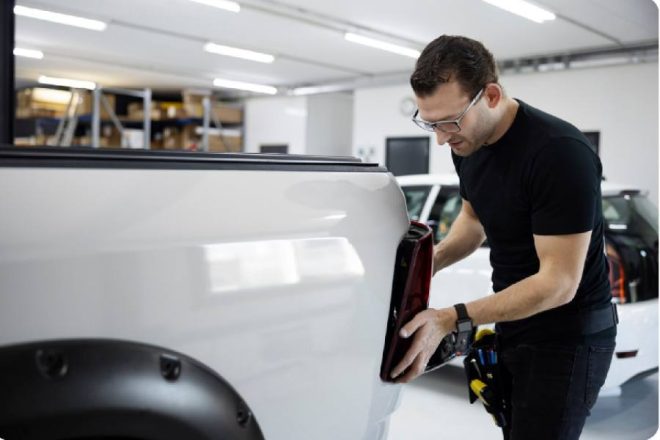
Pulling up to a shop expecting to drop the car off for a wrap and seeing the installer immediately start unbolting your headlights catches a lot of owners off guard. Why are they taking the car apart? Isn’t the wrap just going on top of the panels, the way they sit? The short answer is no, not really, not for any wrap install that’s actually meant to last. The longer answer is that proper wrap installation involves taking apart a meaningful amount of the exterior trim before any film comes near the paint. This is normal; skipping it is one of the clearest signs of a corner-cutting shop.
Disassembly is one of those parts of the process that almost no one discusses in marketing language. Quotes mention film brands and coverage areas. They rarely break out trim removal as a line item, even though it’s a real chunk of the total install hours. The busier car wrap shops in Toronto installers budget 2 to 4 hours of disassembly time for a full vehicle wrap, sometimes more on cars with complicated trim work. That’s the time the customer is paying for, whether they see it itemized or not.
If you’ve been searching for PPF near me to compare quotes, the disassembly question is genuinely useful for distinguishing between shops that take the work seriously and those cutting corners. A quote that promises full coverage without disassembly is either undercoating the work or planning to do it poorly. Knowing what should come off and why helps you ask the right questions before booking anywhere.
Why Disassembly Matters for a Clean Install
A wrap that gets installed around fixed trim pieces ends up with film cut tightly against every edge. Those cut edges sit exposed to weather, salt, pressure washers, and physical contact for the entire service life of the wrap. Edges are where wraps fail. So the more edges sitting in vulnerable positions, the more failure points the install carries from day one.
When the trim comes off, the film can wrap beneath it and tuck cleanly out of sight. The trim then bolts back over top, hiding the edge entirely and protecting the adhesive from everything the road throws at it. Same wrap, same film, same installer. Massively different long-term outcomes based purely on whether trim came off or stayed on.
Common Pieces That Come Off
Headlights and taillights almost always come off for a quality install. The door handles unbolt on most cars. Side mirrors usually come apart enough to get film underneath them. Rear quarter glass trim. Antenna mounts. Front and rear emblems on the bumpers. License plate mounts. Roof rails on SUVs. Sometimes the front grille is plastic and bolts off easily.
Bumpers themselves don’t always come off, but the cover edges get loosened so film can tuck behind them. Same with fender liners and wheel arch trim. The goal is to create tucked edges everywhere possible so the visible install looks like the wrap is part of the car rather than a layer sitting on top.
Why Some Shops Skip This Step
Time is the obvious answer. Disassembly adds hours to every job, and shops that bill flat rates per panel make less margin if those hours. Skill is the other reason. Taking apart modern cars without breaking plastic clips or scratching painted surfaces requires experience. Some shops avoid disassembly because their installers genuinely don’t have the skill to remove the trim cleanly.
Then there’s the warranty question. Some installers worry about being blamed if a clip breaks or a sensor stops working after reassembly. Easier to just leave everything bolted together and trim around it. The customer doesn’t know what they’re missing because nothing looks visibly wrong on day one. The cost shows up two years later when the edge lift starts everywhere the trim should have been removed.
What Proper Reassembly Involves
Taking trim off is half the job. Putting it back on properly is the other half and arguably the harder half. Plastic clips on modern cars are designed for one or two removal cycles. Push that count higher, and the clips weaken or break entirely. Quality shops keep replacement clips in stock for common vehicles and just replace anything that looks compromised during reassembly, rather than reusing it and hoping for the best.
Torque values matter too. Headlight mounting bolts have specific torque specs from the manufacturer. Overtighten and you crack the headlight housing. Undertighten and the headlight vibrates loose over time. Real shops follow torque specs. Hack shops just snug everything down by feel and hope the customer never finds out.
Sensors and Electronics
Modern cars carry parking sensors, lane departure cameras, blind spot monitors, headlight washers, and a long list of other electronic bits embedded in the bumpers and trim. Disassembly means disconnecting and reconnecting wiring harnesses for all of these. A shop that knows what it’s doing handles the disconnects carefully and tests every system after reassembly. A shop in a hurry sometimes pinches a wire or forgets to plug something back in, and the customer drives off, not realizing the parking sensors stopped working until they back into something a week later.
This is part of why disassembly is genuinely skilled work. It’s not just unbolting things. It’s understanding what each connector does, where it routes through the car, and how to verify everything still functions after the wrap is on. Anyone who’s compared experiences after searching for “ppf near me” will eventually hear stories about shops that delivered a perfect-looking wrap with a malfunctioning sensor or two as a parting gift.
What to Ask Before Booking
One question covers most of it. What gets disassembled for the wrap quoted? A shop that provides a clear answer and lists specific pieces is doing the work properly. A shop that says they wrap around the trim or that disassembly isn’t necessary is signalling exactly what they’re planning to deliver.
Studios such as Colibri Car Styling treat disassembly as a standard procedure for full wraps and PPF jobs because shortcutting that step compromises everything that follows. You can check the PPF service options here to see how a Toronto shop structures the process.
Disassembly is the unglamorous work that decides whether a wrap looks installed or applied. Worth asking about before signing anything.
Featured Image Source: https://www.magnific.com/free-photo/medium-shot-man-fixing-car_25811337.htm#fromView=search&page=1&position=7&uuid=4f8bf58f-49c9-4c59-8c25-349a535261e0&query=Disassembly+Process+at+Car+Wrap+Shops
