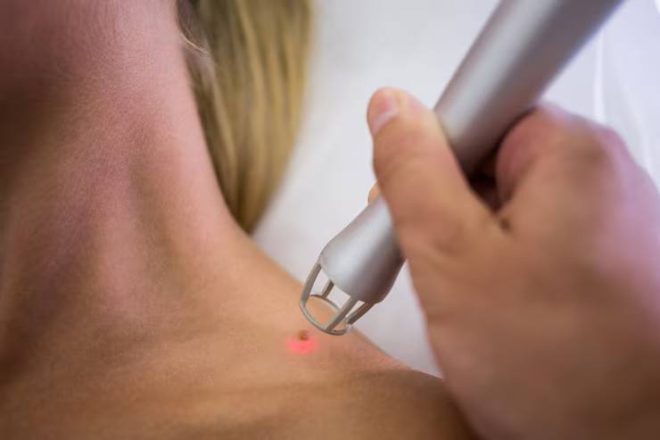
Most people first notice a mole long before they ever think about having it professionally checked. It might be something they have lived with for years, or something that has slowly changed shape or colour over time without them really paying attention to it day by day. The thing is, skin does not stay completely static. It shifts with age, sun exposure, hormones, and sometimes just time itself in ways that are not immediately obvious in the mirror.
A consultation for mole removal near me usually starts much earlier than the actual removal procedure. What often surprises people is how much emphasis is placed on assessment before any decision is made. Dermatologists tend to slow things down at this stage. Not because the process is complicated for the sake of it, but because skin evaluation tells a much bigger story than the mole alone.
That initial evaluation is also where Define Clinic comes into the picture for many patients looking for structured, professional dermatology care. Clinics that specialise in skin procedures rarely rush into treatment without first building a clear picture of what is actually going on beneath the surface. The visible mole is only part of it. The surrounding skin, texture changes, and history of growth patterns all start to matter just as much once a proper assessment begins.
What People Usually Expect Versus What Actually Happens
Most people walk into a consultation expecting a quick look and a straightforward yes-or-no. Maybe a brief inspection, followed by a discussion about removal options. The reality is usually a bit more detailed than that.
Skin assessment typically begins with observation in good lighting. Not the kind of glance people are used to doing at home, but a careful look at shape symmetry, border definition, and pigmentation consistency. Even small details that seem insignificant can influence the overall evaluation.
The thing is, moles rarely exist in isolation from the rest of the skin’s behaviour. A single spot might look harmless on its own, but when compared with other markings on the body or changes over time, the picture can shift slightly. That is why professionals rarely rely on just one visual check.
Why Assessment Comes Before Any Removal Decision
It might seem obvious that you would assess something before removing it, but people often underestimate how layered that assessment process actually is. There is a difference between noticing a mole and clinically evaluating it.
Texture plays a role. So does depth. Even how the skin responds when gently examined can provide useful context. Some moles remain completely stable for years, while others change gradually in ways that are not always easy to detect without documentation or comparison.
This is also where caution becomes part of the process. Skin procedures are not treated casually by experienced practitioners because the goal is not just cosmetic change. It ensures that whatever is being removed has been properly understood first.
The Subtle Signs That Matter More Than Expected
People often assume that only dramatic changes are important. Rapid growth, obvious discolouration, or sudden pain tend to get attention. But in practice, smaller shifts often carry just as much weight during assessment.
A mole that slowly becomes more raised over time. There is a slight irregularity in its edges that was not there before. A subtle change in how it reflects light compared to the surrounding skin. These are the kinds of details that trained eyes pick up on more easily than patients themselves.
The interesting part is that most individuals only realise these changes once they are pointed out during consultation. Before that, everything can feel essentially unchanged from year to year.
Why Professional Evaluation Changes the Outcome
Once a full assessment is complete, the discussion around removal becomes much clearer. Not just whether removal is possible, but what method makes sense, how the skin might respond, and what kind of follow-up care is needed.
It is rarely a one-size-fits-all process. Some cases are straightforward; others require a slower, more careful approach depending on skin type and mole characteristics. That is where clinical judgment plays a central role, rather than assumptions made at home.
Clinics like Define Clinic typically structure this process in stages, ensuring that patients understand what is being observed before any procedure is recommended. It creates a more grounded decision-making process rather than a rushed one based purely on appearance or concern.
Why Taking Time at the Start Prevents Complications Later
There is a tendency to want quick answers when something appears on the skin. That is understandable. But rushing directly to removal without proper assessment can sometimes lead to an incomplete understanding of the issue.
A careful evaluation at the beginning usually prevents uncertainty later. It also helps ensure that any procedure performed is appropriate for the specific skin context rather than just the visible mole itself.
Most people only think about the result. Smoother skin, removal of the spot, cosmetic improvement. But in professional dermatology, the process leading up to that result is often what determines how successful and safe it ultimately is.
Featured Image Source: https://img.freepik.com/free-photo/dermatologist-removing-mole-from-womans-shoulder_107420-74018.jpg?semt=ais_hybrid&w=740&q=80
