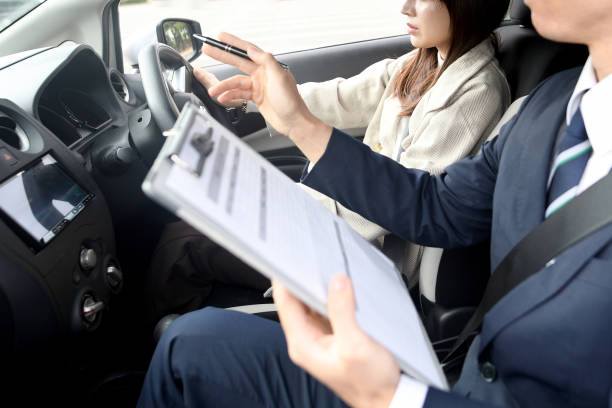
Being successful during your first Glasgow driving test is more dependent on habit than fate. Glasgow driving instructors have witnessed countless learners throughout their testing experience, and the learners who pass are those who create consistent habits of observing, controlling speed, and making decisions well before their testing day.
Learners generally ask one question before committing to their lessons: What is it that makes a learner pass on their first try? It’s a common question for Glasgow driving instructors to hear from prospective learners. The simple answer is that passing on your first attempt is all about forming habits, not innate skills.
Habit always beats instinct during your testing day. Glasgow driving instructors will often say that learners who pass on the first attempt are not always the fastest learners. They are the ones who built reliable routines, lesson after lesson, until those routines stopped feeling like effort.
The DVSA pass rate in Scotland sits around 50 per cent, with some variation by test centre. Glasgow driving instructors working in the city see that figure reflected in their own students, which means roughly half the people walking into a test pass, and half do not. The gap between those two groups usually lies in their habits.
Mirror Use That Becomes Automatic
The first habit worth building is mirror checks. Not glancing. Actual checking, with enough time to register what is there.
Examiners watch for mirror use before signalling, before changing speed, and before changing direction. Learners who forget one of those three lose marks fast.
Build the routine early. Mirror, signal, manoeuvre. Repeat it at every junction, every lane change, every roundabout. After a few weeks, it becomes muscle memory, which is exactly what you want under test pressure.
Speed That Matches the Road
Driving too slowly is one of the most common reasons learners fail. Many assume slow equals safe. Examiners do not see it that way.
Speed needs to match the road and the conditions. A 30-mile-per-hour limit on a clear stretch means you should be near 30, not crawling at 22 because you feel nervous. Holding up traffic counts as a fault.
The opposite problem exists too. Some learners speed up on familiar roads because they relax. Both extremes show up on the report sheet.
Practise reading speed limit signs out loud during early lessons. It sounds silly. It works.
Decisions at Junctions
At the junction is where most of the passing or failing will happen. The driver who hesitates at the junction is seen as unsure. The driver who comes out too quickly will appear reckless. This will cost you marks.
The thing to develop here is commitment. You must look, make your decision, and go for it. If you have decided to move, you should carry on moving unless there is something really different.
Roundabouts also deserve some separate consideration. You should choose the correct lane according to your destination, give proper signals, and glance in the mirror before coming off. Roundabouts in Glasgow have some strange lane markings; hence, you will have to read the signs before getting onto the roundabout.
Frequently Asked Questions
What is the pass rate for first-time learners in Glasgow?
First-time pass rates in Glasgow tend to sit slightly below the national average, depending on the test centre used.
How many hours of practice did it take you to pass the first time?
Most first-time passers complete around 45 hours of lessons plus 20 or more hours of private practice before the test.
Can you book intensive courses in Glasgow?
Yes, intensive courses run from one to several weeks, though they suit learners who already have some driving experience.
How early should you book your practical test?
Booking as soon as you pass theory is sensible, since wait times in Glasgow can stretch to several months.
What happens if you fail the first attempt?
You can rebook after ten working days, and most learners pass on the second attempt with focused practice on weak areas.
Final Thoughts
First-time passing is more dependent on having good driving habits rather than being a good driver at heart. Establish the routine from the beginning, stick to it until you feel bored doing so, and the test will turn into just another lesson for you.
Featured Image Source: https://media.istockphoto.com/id/1752378092/photo/a-woman-and-a-male-instructor-during-driving-lessons.jpg?b=1&s=612×612&w=0&k=20&c=Wm76sRfAlmONeX7ez4J7IJlOx6RBar_7pYe0EXD2e_Y=
