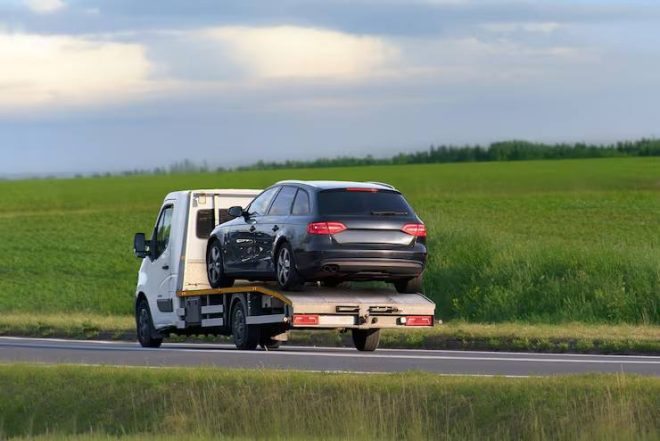
There was a time when most vehicle towing basically meant hooking the car up from one end and dragging it wherever it needed to go. For short trips across town, that setup usually worked well enough. But once longer distances started getting involved, especially with lower-clearance vehicles, all-wheel-drive systems, motorcycles, or heavier equipment, the limitations of traditional towing became pretty obvious pretty quickly. Extra tire wear. Suspension strain. Road debris is getting kicked up for hundreds of miles at highway speed. A lot of vehicle owners don’t really think about any of this until they actually need a tow over a long distance.
That’s one reason a professional towing company will usually recommend flatbed transport whenever possible. Instead of rolling behind the truck with two wheels still touching the pavement, the entire vehicle sits fully elevated on the bed itself. The difference sounds simple on paper, but in practice, it changes almost everything about how safely the vehicle travels. For long-distance moves especially, flatbeds reduce wear, minimize exposure to road hazards, and give operators better overall control throughout the trip.
What this post breaks down is why flatbed towing gets recommended so often for long-distance hauling, where it makes the biggest difference, and why many modern towing services have shifted heavily toward flatbed equipment over the past several years. Whether someone is moving a standard commuter vehicle, transporting machinery, or recovering a damaged car after an accident, the advantages become pretty hard to ignore once you understand how the transport process actually works.
Keeping All Four Wheels Off the Road
Probably the biggest advantage flatbed towing brings is that the vehicle itself never makes contact with the road during transport. That matters more than people realize. Traditional wheel-lift towing still leaves part of the vehicle rolling for the entire trip, which means tires, wheel bearings, suspension components, and driveline systems continue experiencing stress mile after mile.
With flatbed transport, everything stays stationary once the vehicle is secured onto the platform. No additional mileage gets added mechanically. No uneven tire wear builds up during transport. This becomes especially important for luxury vehicles, older classics, motorcycles, and all-wheel-drive vehicles, where drivetrain systems are designed to operate with all four wheels moving together rather than only two.
Better Protection During Long Highway Trips
Long-distance towing changes the equation compared to local recovery jobs. A ten-minute tow across Miami traffic is one thing. A several-hundred-mile transport across highways at full speed introduces a completely different level of exposure to debris, potholes, weather conditions, and sudden road movement.
Flatbeds help stabilize the load far better throughout those longer trips. Vehicles are strapped down at multiple secure points, reducing bounce and movement while traveling at highway speeds. Lower-profile cars especially benefit from this setup because steep angles and road dips are much less of a problem than with standard towing methods.
Honestly, this is usually the point where people start understanding why dealerships, auction companies, and commercial fleets rely so heavily on flatbed transport in the first place. Once you’re dealing with expensive equipment or vehicles that can’t afford any additional damage, the safer option becomes the obvious one pretty quickly.
Safer for Damaged Vehicles
Accident recovery is another area where flatbeds make a major difference. Vehicles emerging from collisions often have compromised suspension systems, bent axles, damaged tires, or leaking fluids. Trying to tow a damaged vehicle conventionally can sometimes create even more mechanical problems during transport.
Flatbeds eliminate most of those concerns because the vehicle is simply winched directly onto the platform, without requiring its wheels or suspension to function properly. This also gives operators more flexibility when recovering vehicles from difficult positions after accidents or roadside incidents.
For vehicles that have already endured enough stress during a collision, avoiding additional strain during transport matters far more than many drivers initially assume.
Useful Beyond Standard Passenger Vehicles
One thing people often overlook is how versatile flatbed transport actually is beyond ordinary cars and trucks. Construction equipment, pallets, small machinery, motorcycles, and specialty cargo all move more securely on a flat platform compared to traditional tow setups.
That flexibility is part of why companies handling commercial transport tend to keep flatbeds heavily involved in daily operations. The same truck that transports a disabled SUV one day might handle light machinery or construction materials the next. It’s a more adaptable setup overall, especially for businesses moving equipment across different job sites around Miami and the surrounding areas.
Planning for the Right Type of Tow
The reality is that not every towing situation requires a flatbed. Short local transports for standard front-wheel-drive vehicles can often be handled perfectly fine using wheel-lift equipment, depending on the circumstances. But when distance increases, vehicle value increases, or damage is already involved, flatbed towing usually becomes the safer long-term decision.
A lot of towing problems honestly come down to using the wrong transport method for the job. Choosing the cheaper or faster option up front sometimes leads to extra repair costs later that could have been avoided entirely.
Working with an experienced transport provider like Quintana Towing Services LLC helps ensure that the towing method matches the vehicle’s condition and the demands of the trip. Long-distance transport becomes much less stressful once the vehicle is fully secured, properly balanced, and protected for the entire drive rather than simply being pulled behind a truck and hoping everything goes smoothly along the way.
Featured Image Source: https://img.freepik.com/premium-photo/car-being-towed-by-roadside-assistance-vehicle_782515-29937.jpg?semt=ais_hybrid&w=740&q=80
