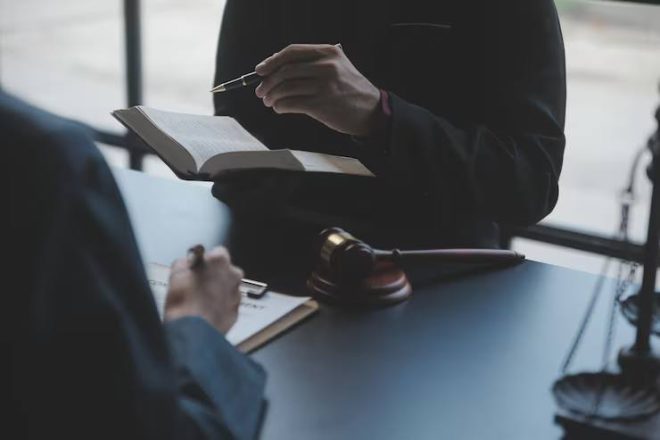
Most people hear the phrase forensic evidence and immediately think of something definitive. A fingerprint gets matched. DNA comes back from a lab. A report is handed over in court. Case closed.
At least that’s how it tends to look from the outside.
The reality is usually a lot more complicated than that. Every piece of forensic evidence has a story behind it. Someone collected it, transported it, stored it, tested it, documented it, and eventually presented it as part of a criminal case. A criminal justice attorney understands that the reliability of forensic evidence often depends just as much on that process as it does on the final result printed on a report.
What this post breaks down is how a criminal defense attorney reviews forensic evidence, what details tend to receive the closest attention, and why a careful review can sometimes reveal issues that are not immediately obvious when looking at a case file for the first time.
Looking Beyond the Laboratory Report
One of the biggest misconceptions about forensic evidence is that the report itself tells the entire story. Most reports are designed to summarize findings, not explain every step that led to those findings.
That is why attorneys often spend time reviewing the underlying documentation. Collection records, photographs, investigator notes, laboratory worksheets, and testing procedures can all provide important context. Sometimes everything lines up exactly as expected. Other times, questions begin to emerge once the supporting records are examined more closely.
The report may be the final product, but it is rarely the only thing worth reviewing.
Following the Evidence Trail
Every piece of evidence is supposed to follow a documented path from the moment it is collected until it appears in court. This process is known as the chain of custody.
Sounds straightforward enough.
In practice, evidence can pass through multiple hands over weeks, months, or even years. Officers collect it. Evidence technicians process it. Laboratories receive it. Storage facilities hold it. Each transfer is supposed to be documented along the way.
Missing records or unexplained gaps do not automatically make evidence unusable, but they can raise legitimate questions. If nobody can clearly explain where the evidence was at a certain point or who had access to it, that warrants further investigation.
Reviewing How Evidence Was Collected
Forensic testing is only as reliable as the evidence that enters the testing process in the first place.
Take biological samples, for example. They need to be collected using specific procedures designed to prevent contamination. Digital evidence requires its own protocols. Fingerprint collection also comes with standards. Small mistakes made during collection can sometimes create larger issues later.
Nobody really thinks about these early steps when they hear about forensic evidence on the news. Yet attorneys often spend considerable time reviewing exactly what happened at the beginning of the investigation because problems that occur early can affect everything that follows.
Examining the Testing Process
Laboratories perform important work, but people still operate them.
And people make mistakes.
That does not mean forensic results are unreliable. It simply means they should be reviewed carefully, especially when the stakes are high. Attorneys may examine testing methods, quality control records, analyst notes, and laboratory procedures to better understand how conclusions were reached.
Sometimes the review confirms that everything was handled properly. Sometimes it uncovers inconsistencies that deserve additional scrutiny. Either way, understanding the process behind the result is often just as important as understanding the result itself.
Comparing Forensic Evidence to the Rest of the Case
One interesting thing about criminal investigations is that evidence rarely exists in isolation.
A laboratory result may tell one part of the story. Witness statements tell another. Surveillance footage adds something different. Police reports contribute their own perspective.
The goal is to see how all of those pieces fit together.
Forensic evidence can significantly reinforce a case when it backs up the other facts available. When there is a mismatch in timelines, witness testimonies are inconsistent with physical evidence, or other discrepancies emerge, such discrepancies can become significant points of further investigation. The information is more than most individuals think.
Digital Evidence Needs Its Review.
Criminal cases today are increasingly related to phones, computers, GPS data, social media profiles, and other online documents.
Many individuals believe that digital evidence is absolutely objective because it is a product of technology. It turns out that digital data is not always that easy to interpret.
Data still has to be gathered, stored, and analyzed appropriately. Context matters. It might appear that a location record, message history, or device log is a simple concept, but it is often the case that the information contained within it can be proven in many ways.
With the increasing use of digital evidence, lawyers are spending more time analyzing how the information was acquired and whether the conclusions drawn from it are well substantiated by the facts.
The importance of a thorough review.
Forensic evidence may be one of the most powerful aspects of a criminal case. Still, it is hardly ever that straightforward that a laboratory result makes everything all on its own. The evidence processes, the individuals involved in the evidence, the testing procedures, and how it fits into the overall facts of the case all contribute to the reliability of the evidence.
This is why the review of forensic evidence remains a significant aspect of criminal defense practice. A close examination can easily reveal information one might otherwise ignore when focusing on the ultimate conclusions. Companies such as Piotrowski Law know that the initial step in developing a solid defense is often to pose questions about how evidence was gathered, processed, and examined, well before it ever reaches a courtroom. Such details are not necessarily evident, but they are where some of the most valuable answers can be found.
Featured Image Source: https://img.freepik.com/premium-photo/male-lawyer-working-with-contract-papers-wooden-gavel-tabel-courtroom-justice-law-attorney-court-judge-concept_265022-35779.jpg?semt=ais_hybrid&w=740&q=80
