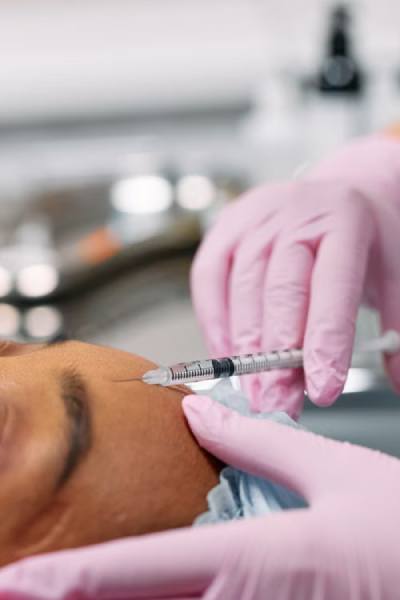
Someone mentions Botox at dinner, and half the table pictures the same thing. A stiff forehead. Eyebrows that will not move. A person whose expression is stuck in the middle of being surprised for months on end. This picture stays with you, and it repels many people from asking a genuine question even before they do. This apprehension seems valid since everyone knows of one instance where someone went overboard. It could be a celebrity or someone from work. The frozen face has become the thing people fear most.
Here is the part that gets lost. This is certainly not the desired outcome of proper treatment, nor is this the kind of outcome that patients go home with after their treatments. A proper Botox in London procedure should be completely unnoticeable, giving only the impression of a refreshed face.
Where the Frozen Look Actually Comes From
The stiff, expressionless result rarely comes from the treatment itself. It comes from how the treatment gets used. Too much product in the wrong muscles freezes movement completely. It is an issue of methodology, not Botox. A sharp knife cuts clean or cuts dirty based entirely on the hands holding it. The same tool is used in two wildly different ways. The injector plays a huge role. At Define Clinic, the objective is to tone down rather than erase. A clinician who knows how the muscles work places tiny amounts in certain areas. Enough of the muscle is relaxed to soften the line, yet still enough left active to function normally.
If the result is overdone, it was usually due to one of a handful of reasons:
- Too high a dose for the area
- Product placed in muscles that should stay active
- A blanket approach that ignores individual anatomy
- Chasing complete stillness instead of natural softening
What Natural Botox Results Look Like
Picture your face on a good day. Well rested, relaxed, maybe just back from a holiday. That is roughly the target. Not a different face. The same one, slightly smoothed.
You should still frown when something annoys you. You should still lift your brows when surprised. Your eyes should still crinkle a little when you laugh, because a completely still face around the eyes tends to read as odd rather than youthful.
The lines soften. They do not always disappear, and that is fine. A faint forehead line on a moving, expressive face looks far better than a glassy, motionless one. Most people around you will not spot the treatment. They might say you look well without knowing why.
Results settle over roughly two weeks. The effect holds for about three to four months before muscle movement gradually returns. That gradual fade is worth remembering, because it means nothing is permanent if you dislike the outcome.
Why the London Clinic You Choose Changes Everything
Botox is a prescription treatment, and the person injecting it needs proper medical training. That sounds obvious, yet the market is full of quick, cheap options that skip the careful bits.
A rushed appointment tends to produce rushed results. A proper one starts with a conversation. What bothers you? What do you want to keep? A good practitioner watches your face move before deciding anything.
Ask a few questions before booking anywhere:
- Who performs the treatment, and what is their medical background?
- Do they assess your face in motion, not just at rest?
- Will they talk you out of too much if you ask for it?
That last point matters more than people realise. A practitioner willing to say no is often the one worth trusting. The ones who inject whatever you request, no questions asked, tend to create the very results you were scared of.
The Fear of Looking “Done”
Plenty of people want treatment but dread the label. Looking “done” carries a stigma, and honestly, that fear is not silly. Nobody wants their face to announce a procedure before they say a word.
The irony is that natural results are almost invisible by design. The people you assume have never had anything done sometimes have. You cannot tell, because it was handled with restraint.
Restraint is the whole point. Less is usually more here. Starting conservative and adding a touch later beats overdoing it and waiting months for movement to return. You can always top up. You cannot easily undo it.
There is something a bit reassuring in that, I think. The treatment is forgiving if you approach it slowly. Rush it, and you gamble. Take it steady, and the risk shrinks considerably.
Starting Slow and Building Trust
A first appointment does not commit you to anything dramatic. A conservative starting dose lets you see how your face responds. From there you adjust.
This measured approach suits nervous first-timers well. You are not signing up for a frozen forehead. You are testing a small change, then deciding whether you want more. Some people stop after one visit, happy with a subtle softening. Others build a longer plan over time. Both are perfectly valid.
The frozen look belongs to a different era of treatment, and to practitioners chasing the wrong goal. Modern, careful work aims somewhere gentler. Your face, relaxed and rested, still fully yours.
Book a consultation, ask the awkward questions, and pay attention to whether the practitioner listens. The right one will care as much about keeping your expressions as softening your lines. That balance is where natural results actually come from.
