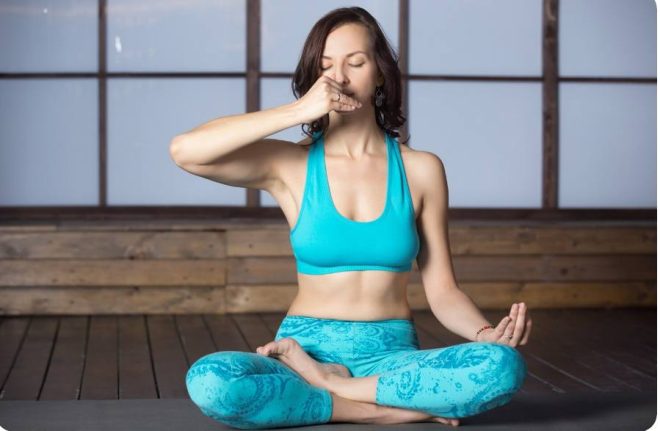
Show up to a yoga class, and within five minutes, the teacher is throwing breath cues at you. Inhale here and exhale here. Match the breath to whatever movement is coming next in the flow. New folks usually just sort of go along with all this without really stopping to ask why so much attention is being paid to the breath specifically. What’s breathing got to do with any of it, really?
Breathing kind of is the main event, and the poses are organized around the breath rather than the other way around. This is the opposite of what most beginners would assume going in. How you breathe through class ultimately determines what the practice does to your nervous system, your stress, and how strong and steady you can hold the shapes themselves. Yoga in Pacific Beach make breath cueing a real focus during class, because once the breath drops out of a pose, the pose just stops being yoga and turns into a kind of weird calisthenics instead.
So this post breaks down what mindful breathing does in practice and why it matters as much as it does. If you have been searching for yoga near me, trying to find a studio that actually teaches the breath piece properly instead of treating it like an item to check off before everyone moves on, Tranquil Tree Yoga in Pacific Beach runs small group classes where the breath work gets the kind of attention it deserves, not just a quick name-drop between transitions.
What Mindful Breathing Even Means
Breathing slowly isn’t the same thing as breathing mindfully. There is actually a real difference. Mindful means breathing with attention on what you are doing. Like knowing whether the breath is up in your chest or down in your belly. Catching whether the inhale matches the exhale or one is way longer than the other. Noticing if it sounds smooth or jagged. All of that is real data about what’s happening in your body, and most people honestly live whole lives without ever paying attention to any of it.
The attention bit is what makes it mindful. Once you start watching, you quickly realize that your breathing shifts constantly based on what you are doing and how you feel about it. Stress, it goes shallow. Effort, it gets ragged. Boredom almost completely stops. Getting the breath under some kind of conscious control is the foundation on which everything else yoga aims to do is built.
How Breath Connects to the Nervous System
Breath is one of those rare autonomic things you actually have access to. Heart rate, no, that just does its own thing. Most of the body kind of just runs itself, whether you are paying any attention or not. Breathing also runs on its own when you ignore it, but unlike the rest of the autonomic stuff, you can step in and grab the wheel whenever you decide to.
Which matters because breath is wired right into the nervous system. Slow deep breathing tips parasympathetic on. Quick, shallow breathing keeps the sympathetic nervous system running hot. So learning how to breathe on purpose is essentially learning how to manage your own nervous system state, which honestly carries way past anything happening on a yoga mat.
Ujjayi Breath and Why Teachers Cue It
You know that breath in a vinyasa class that sounds kind of like the ocean. Yeah, thats ujjayi. The sound is made by tightening the back of your throat a little as the breath goes in and comes out. Audible quality is half the goal and half just a side effect. The real goal is for the throat constriction to slow the breath while keeping it controlled.
That audible quality also gives you a kind of feedback loop. Hear your breath, and you can immediately catch when it gets choppy or pauses entirely on you. Losing your ujjayi in the middle of a hard pose is basically the body telling you that you have pushed past where the work was useful. Coming back to the breath is how you walk yourself back into a place inside the shape that you can actually sustain.
The Inhale Exhale Ratio
Most casual practitioners never get taught this part. Length of the inhale compared to the exhale actually changes what the breath does to you. Exhales longer than inhales, which pushes the system toward rest. Same length on both, you stay steady. Inhales longer than exhales, which bumps you up a bit toward more energy.
Box breathing is equal in length for all four parts. The four-seven-eight pattern is way longer on the exhale than on the inhale, which is exactly why it’s used as a sleep aid. Once you actually understand the ratios, breathing becomes a real lever for shifting your state on purpose, rather than just sort of hoping it helps somehow.
Building a Breath Practice
The good news is that breath work stacks nicely on itself. The more time you put into it on the mat, the more it shows up off the mat in regular life. People who have been practicing pranayama for years can lower their heart rate and blood pressure and reset their nervous system in about 2 minutes of focused breathing. Genuinely useful skill to have when real-life stress shows up, and you actually need it for something.
Even just five minutes a day of conscious breathing is enough to build the capacity on its own. Sit somewhere comfortable, focus on the breath, stretch the exhale a little, and watch its rhythm. Actually genuinely useful in real life. Benefits keep stacking, just like every other long-term practice.
Mindful breathing isn’t the showy Instagrammable piece of yoga. It’s the part doing most of the actual work behind the scenes. Worth taking seriously from the start of your practice, instead of treating it like ambient background noise while you put all the focus on the poses themselves.
Featured Image Source: https://www.magnific.com/free-photo/young-attractive-woman-making-alternate-nostril-breathing-studi_1281941.htm#fromView=search&page=1&position=0&uuid=36220a9f-679d-4ea7-a5ef-066d7b6e1bc3&query=mindful+breathing+in+yoga
