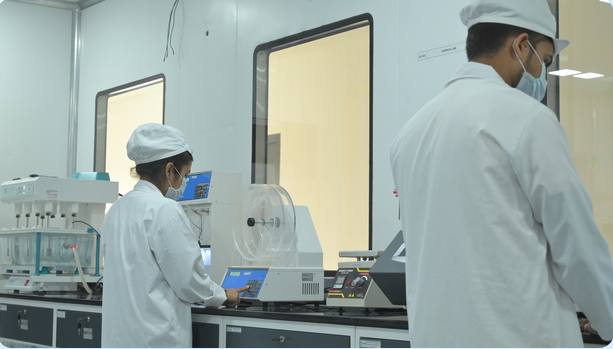
Batch-to-batch consistency isn’t just a manufacturing goal. It’s a promise between pharmaceutical companies and patients worldwide.
Every time you purchase paracetamol or blood pressure medication, you trust that today’s tablet works exactly like yesterday’s. That trust crumbles when batches vary even slightly.
Consider this: A 2019 batch recall affected over 50,000 patients because of inconsistent drug potency. Some tablets contained 80% of the stated dose. Others exceeded safe limits by 15%.
The consequences? Hospitalizations. Treatment failures. Regulatory penalties reaching millions.
How can millions of tablets remain identical across years of production? The answer lies in systems most patients never see but absolutely depend on.
Batch-to-batch consistency in pharmaceutical manufacturing determines whether medicines save lives or create new problems. Let’s examine how manufacturers keep every single dose reliably identical.
1. Standardised Raw Materials and Supplier Qualification
Your medicine’s consistency begins long before manufacturing starts.
It starts with the raw materials arriving at the facility gate.
Think about baking a cake. Using different flour brands each time produces different results, even if you follow the same recipe. The same principle applies to pharmaceutical manufacturing, but the stakes are infinitely higher.
A medicine manufacturing company must source active pharmaceutical ingredients (APIs) and excipients that meet exact specifications every single time. Even minor variations in particle size, moisture content, or chemical purity can alter how a drug dissolves in your body.
That’s why rigorous supplier qualification exists.
Vendors undergo comprehensive audits examining their manufacturing processes, quality systems, and testing capabilities. Only approved suppliers make the list.
Before any raw material enters production, it faces incoming quality checks. Certificates of Analysis (CoA) accompany every shipment, documenting chemical composition, purity levels, and physical characteristics.
But manufacturers don’t just accept these certificates at face value.
They conduct their own testing to verify specifications. Random sampling. Identity testing. Impurity profiling.
Here’s a real example: In 2021, several batches of a cardiovascular drug failed stability testing. Investigation revealed that one supplier’s magnesium stearate contained moisture levels 2% above specifications. That tiny difference affected tablet hardness across 30 production batches.
Pharmaceutical raw materials and supplier qualification under GMP sourcing protocols prevent such scenarios before they happen.
You might not think much about ingredient sourcing when picking up a prescription. But this invisible quality control protects you from manufacturing inconsistencies that could render your treatment useless or dangerous.
2. Validated Manufacturing Processes and SOPs
Once quality materials arrive, the real challenge begins: transforming them into identical products repeatedly.
Process validation makes this possible.
Validation proves that your manufacturing process produces consistent results every single time you run it. Not once. Not occasionally. Every time.
Think of it like this: Anyone can cook a good meal once by accident. A professional chef can cook the same dish perfectly night after night because they follow precise methods.
Pharmaceutical manufacturing works the same way, except the consequences of variation are far more serious.
Detailed Standard Operating Procedures (SOPs) document every manufacturing step. These aren’t vague guidelines. They’re specific instructions covering:
- Exact mixing times and speeds
- Temperature ranges with acceptable deviations
- Equipment settings and sequences
- Sampling points and testing requirements
- Documentation and approval checkpoints
Equipment calibration ensures machines perform identically over time. A tablet press compressing at 10 kilonewtons today must compress at 10 kilonewtons six months from now.
Process controls monitor critical parameters continuously. If compression force drifts outside specifications, alarms trigger immediately. Production stops until the issue resolves.
Perhaps this seems excessive. But pharmaceutical SOPs and GMP manufacturing standards exist because even small process variations create big problems.
Consider tablet coating. If the coating solution sprays too quickly, tablets get uneven coverage. If it sprays too slowly, production times increase and tablets dry poorly.
Process validation identifies the exact spray rate that works consistently. SOPs then ensure operators use that exact rate for every single batch, forever.
This standardisation removes guesswork and human error from manufacturing. The process becomes a reliable system rather than depending on individual skill or judgement.
You don’t need to understand every technical detail. What matters is knowing that validated processes protect you from receiving medicine that differs from what clinical trials tested.
3. In-Process Controls and Real-Time Monitoring
Waiting until production ends to check quality is too late.
Problems caught after manufacturing waste time, materials, and money. Worse, they might slip through to patients.
That’s why in-process controls exist throughout production.
These checkpoints catch deviations as they happen, not after thousands of tablets are already produced.
Here are typical in-process monitoring points:
- Weight checks during granulation (are ingredients mixing properly?)
- Particle size distribution testing (will tablets compress uniformly?)
- Moisture content during drying (are granules too wet or too dry?)
- Hardness testing during compression (will tablets survive packaging and transport?)
- Thickness and weight measurements (are all tablets identical?)
Process Analytical Technology (PAT) takes monitoring further. Automated sensors continuously measure critical quality attributes without human intervention.
Near-infrared spectroscopy can analyse tablet composition in real-time. If the API distribution shifts even slightly, the system alerts operators immediately.
Some facilities use visual inspection systems that photograph every single tablet. Computer algorithms detect colour variations, chips, or defects that human eyes might miss at production speeds.
Pharmaceutical quality monitoring and PAT create safety nets at multiple production stages.
This might sound paranoid. Testing at five different points for the same batch?
But think about it differently. Would you rather board an aircraft that underwent one final safety check or one that was monitored throughout assembly?
Real-time monitoring catches problems before they compound. A slight deviation in mixing time won’t multiply into thousands of defective tablets if you catch it during granulation.
Critical quality attributes (CQAs) get special attention because they directly affect drug performance. For tablets, CQAs include dissolution rate, content uniformity, and friability.
If any CQA trends outside specifications during production, operators can adjust parameters immediately rather than scrapping entire batches later.
You benefit from this vigilance every time you take medicine that dissolves correctly and releases the right amount of active ingredient at the right time.
4. Rigorous Quality Control and Batch Testing
Production completion doesn’t mean batch approval.
Every batch undergoes extensive final testing before leaving the facility. This stage verifies that all manufacturing controls actually worked.
Quality control laboratories test finished products for:
Identity: Is this the correct drug and formulation?
Strength: Does each dose contain exactly the stated amount of active ingredient?
Purity: Are impurities and degradation products within safe limits?
Stability: Will the product maintain quality throughout its shelf life?
Pharmaceutical quality control uses sophisticated analytical methods. High-performance liquid chromatography (HPLC) measures drug content with extreme precision. Dissolution testing simulates how tablets break down in your digestive system.
Batch record reviews examine every production step documented during manufacturing. Reviewers check that operators followed SOPs correctly and recorded all data accurately.
Any deviation from normal procedures requires investigation before batch release.
According to FDA guidance, approximately 30% of pharmaceutical manufacturing deviations relate to equipment malfunctions. Another 25% involve human error during processing or documentation.
Deviation management systems investigate these incidents, determine root causes, and implement corrective actions. If a batch suffered from poor granulation due to equipment malfunction, that batch might not reach patients even if final testing shows acceptable results.
Why? Because the manufacturer cannot guarantee consistency if the process didn’t run as validated.
Stability studies extend quality verification beyond initial release. Samples from every batch undergo long-term storage testing under controlled conditions. This confirms the product remains stable throughout its claimed shelf life.
Batch testing creates multiple verification layers. Drug stability testing prevents situations where medicine degrades before the expiry date printed on the package.
Perhaps you’ve wondered why pharmacy shelves sometimes lack certain medications. Often, it’s because batches failed release testing and got rejected. That’s the system working correctly, protecting you from substandard products.
5. Regulatory Compliance and Continuous Improvement
Manufacturing consistency isn’t optional. It’s legally mandated.
Good Manufacturing Practice (GMP) guidelines establish minimum requirements for pharmaceutical production worldwide. The WHO, FDA, and EMA all enforce GMP standards.
Regulatory inspections verify compliance regularly. Inspectors examine batch records, quality systems, and facility conditions without warning.
Non-compliance carries serious consequences. Warning letters. Import bans. Facility shutdowns.
But smart manufacturers view GMP compliance as more than avoiding penalties. It’s a framework for operational excellence.
CAPA (Corrective and Preventive Actions) systems drive continuous improvement. When deviations occur, CAPA requires manufacturers to fix the immediate problem and prevent recurrence.
This might involve:
- Retraining operators
- Updating equipment
- Revising SOPs
- Changing suppliers
- Installing additional monitoring
Data analytics increasingly support quality improvement. Manufacturers track thousands of process parameters across batches, identifying trends that predict potential problems before they occur.
Perhaps tablet hardness gradually decreases over several batches. Analytics spot this trend early. Investigation might reveal normal wear on compression tooling that needs replacement.
Some facilities now use artificial intelligence to optimise manufacturing parameters. Machine learning algorithms analyse historical batch data to recommend settings that maximise consistency.
Pharmaceutical regulations and continuous improvement work together. Regulations set the baseline. Continuous improvement pushes beyond it.
The pharmaceutical manufacturing landscape is evolving rapidly. Electronic batch records replace paper documentation, reducing transcription errors. Blockchain technology enables end-to-end traceability. Real-time release testing might eventually allow faster batch approval.
But the fundamental goal remains unchanged: every patient deserves medicine that works exactly as intended, every single time.
Conclusion
Batch-to-batch consistency doesn’t happen by chance.
It results from layered systems working together: qualified suppliers, validated processes, real-time monitoring, rigorous testing, and strict compliance.
These systems transform pharmaceutical manufacturing from an art into a reliable science.
When you take medicine, you trust an intricate quality framework most patients never see. That framework exists because inconsistency isn’t just unacceptable. It’s dangerous.
Want to learn how technology is reshaping drug quality assurance? The digital transformation of pharmaceutical manufacturing is already changing how companies guarantee consistency and safety.
FAQs
What is batch-to-batch consistency in pharmaceutical manufacturing?
It refers to producing medicine batches with identical quality, strength, purity, and performance every time.
Why is batch consistency important for patient safety?
Inconsistent batches can lead to under-dosing, overdosing, or adverse reactions.
How do GMP guidelines help maintain consistency?
GMP enforces standardised processes, documentation, and quality controls throughout manufacturing.
What technologies improve batch-to-batch consistency?
Automation, PAT tools, AI-based monitoring, and electronic batch records.
What happens if a batch fails consistency checks?
The batch may be rejected, reprocessed, investigated, or recalled depending on severity.
